

Introduction
Pakistan Tax Reforms 2025 has undergone significant transformation—modifications in income tax slabs, surcharges, digital invoicing mandates, and new withholding measures are poised to reshape taxpayer behavior and compliance. These shifts reflect both revenue-generation goals under the IMF-backed federal budget and the increasing digitization of tax administration. This post unpacks the critical tax updates, analyzes their financial impact, and shows how individuals and businesses can adapt strategically.
1. Income Tax Slab Revisions for Salaried Individuals
Effective 1 July 2025, the Finance Act 2025 overhauled the personal income tax slabs for salaried individuals:
| Taxable Income (PKR) | Tax Rate & Base |
|---|---|
| 0 – 600,000 | 0% |
| 600,001 – 1,200,000 | 1% of amount exceeding 600,000 |
| 1,200,001 – 2,200,000 | PKR 6,000 + 11% over 1,200,000 |
| 2,200,001 – 3,200,000 | PKR 116,000 + 23% over 2,200,000 |
| 3,200,001 – 4,100,000 | PKR 346,000 + 30% over 3,200,000 |
| Above 4,100,000 | PKR 616,000 + 35% over 4,100,000 Modelled after KPMG’s breakdown Mercans Global Payroll & PEO |
Example math:
- A salaried individual earning PKR 2.5 million pays:
- PKR 116,000 base for first PKR 2.2 million
- (23% of (2.5m – 2.2m) = 23% of PKR 300,000 = PKR 69,000)
- Total tax = PKR 185,000
- PKR 116,000 base for first PKR 2.2 million
Importantly, the surcharge for incomes exceeding PKR 10 million has been reduced to 9%, down from 10% as of July 2025 Mercans Global Payroll & PEOPwC Tax Summaries.
2. Surcharge and Other Personal Tax Measures
- Salaried individuals exceeding PKR 10 million now pay a 9% surcharge on income tax PwC Tax Summaries.
- Non-salaried individuals and associations of persons (AOPs) with income over PKR 10 million still pay a 10% surcharge PwC Tax Summaries.
- Previously, non-salaried taxpayers faced significantly steeper rates (up to 45%) at certain income ranges PwC Tax SummariesWikipedia.
3. Super Tax Adjustments for Corporates
For businesses, the Finance Act 2025 brings another shift:
- Super tax rates for incomes between PKR 250 million and 500 million are reduced by 0.5 percentage points (e.g., from 3% to 2.5%) PwC Tax Summaries+1.
This lowering can yield meaningful tax relief for high-earning enterprises.
4. Digital Invoicing: A New Era in Tax Administration
As of April–May 2025, Pakistan’s FBR expanded the mandatory electronic invoicing regime:
- Initially for only FMCG sector, e-invoicing now applies to both corporate and non-corporate registered persons Wikipedia.
- Integration with the FBR’s digital system was required by 1 May (corporates) and 1 June (non-corporates), though a one-month extension was granted in April Wikipedia.
Implication: Greater automation, higher audit visibility, and faster invoice reporting—all driving improved compliance.
5. Enforcement, Withholding, and Cash Withdrawal Taxes
Reinforcing enforcement and covering revenue gaps:
a) Digital Transactions
- A Digital Transactions Proceeds Levy has been introduced, targeting domestic vendors supplying digitally delivered goods or services. Banks and couriers act as withholding agents Business RecorderPwC Tax Summaries.
b) Withholding Tax Revisions
- Profit on debt tax has increased from 15% to 20% PwC Tax SummariesWikipedia.
- Detailed changes also affect dividends and digital transaction payouts, with more sectors covered under withholding WikipediaBusiness RecorderPwC Tax Summaries.
c) Cash Withdrawal Tax for Non-Filers
- Withdrawing over PKR 50,000 per day triggers an advance adjustable tax of 0.6% for those not on the Active Taxpayers’ List (ATL) Wikipedia.
- Earlier proposals now expand withholding on cash and digital flows—COD taxes, penalties for non-filers, and broader enforcement are part of the enhanced measures Business RecorderWikipedia+1.
6. Geopolitical & Economic Context: Budget Targets and IMF Pressure
Broader policy landscape includes:
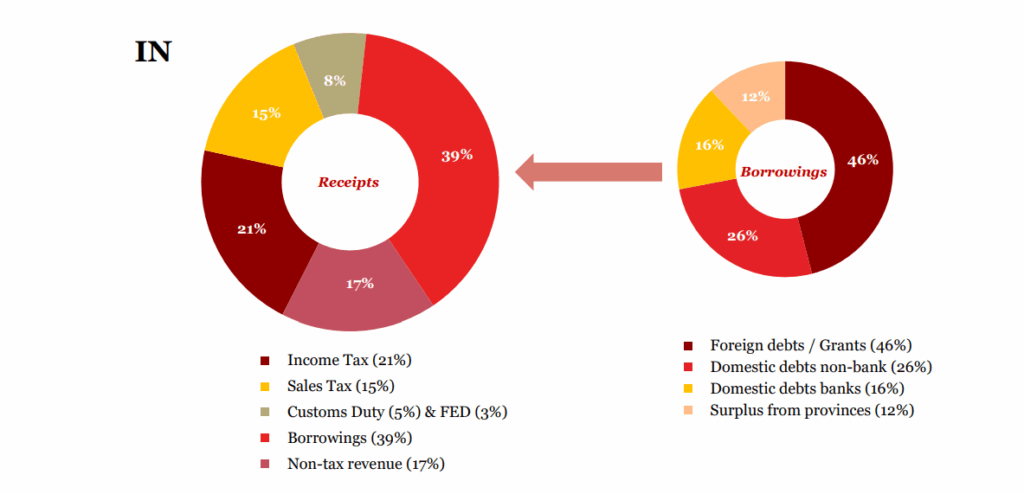
- Pakistan’s 2025–26 federal budget targets around PKR 14.13 trillion in tax revenue, achieved via new taxes, enforcement against non-filers, and widening the tax base—e.g. agriculture, retail, real estate ReutersBusiness Recorder.
- The IMF–backed reform program pushes comprehensive tax mobilization to reduce the fiscal deficit from 5.9% to 3.9% of GDP Reuters.
- This move responds to past critiques of weak tax compliance—only about 1.3% of the population paid income tax in 2024 Reuters.
- Supreme Court has also intervened to protect taxpayer rights—declaring same-day recovery notices unconstitutional Wikipedia.
7. Putting It All Together: Tax Impact Analysis (High-Rank Math)
Let’s compare tax burdens for select profiles:
| Profile | Income | Tax Estimate | Key Takeaways |
|---|---|---|---|
| Individual A (Salaried) | PKR 2.5M | ~PKR 185,000 | Slab benefits clear for mid-income earners |
| Individual B (Salaried High Earner) | PKR 12M | Income tax (apply top slab) + 9% surcharge | Surcharge impacts overall deduction burden |
| Corp. C (PKR 300M income) | PKR 300M | Base tax + reduced super tax rate | Business gets slight relief via 0.5% cut |
| Vendor X (Digital Sales) | PKR 10M turnover | 1% levy + withholding by bank/courier | Need to model effective liquidity impact |
| Non-filer (Withdraws PKR 100K/day) | PKR 100K/day | 0.6% × 100,000 = PKR 600/day in tax | Incentive to register and file |
8. What Should Taxpayers Do Now?
- Update Tax Models: Re-run payroll and financial tax calculations using the new slabs and surcharge rates.
- Register as Filer: Staying off the Active Taxpayers’ List dramatically raises transaction taxes and withholding burdens.
- Adopt Digital Invoicing: Speed up ERP integration to meet FBR deadlines—failure may invite penalties or audits.
- Monitor Digital Transactions Tax: Businesses and freelancers dealing in online services must ensure correct withholding is done.
- Seek Legal Clarity: With expanded FBR powers and enforcement provisions, it’s wise to consult tax advisors to avoid surprises.
9. Further Reading & References
- Explore the full slab breakdown via [KPMG’s report on Finance Act 2025] (external link) KPMG.
- Understand corporate rate changes through [PwC’s summary] (external link) PwC Tax Summaries+1.
- Read details on enforcement and protest response in the Wikipedia section on Finance Act 2025 Wikipedia.
- For digital invoicing guidelines, see the FBR & Wikipedia overview Wikipedia.
- IMF context and growth targets analysis via Reuters news Reuters.
- For taxpayer rights and judicial protections, refer to Supreme Court guidelines shared on Wikipedia Wikipedia.
Conclusion
Pakistan’s 2025 tax reforms reflect a push toward modernization and compliance—but also pose compliance and cash flow challenges. With new slabs, digital mandates, and stiff enforcement, individuals and businesses alike must recalibrate, register, and adapt. The upside: enhanced transparency, better fledge management, and—as the budget hopes—sustainable growth through broader tax contributions.
Consult Ali Law Associates today!